

If you are developing a medical device, you cannot select heat shrink tubing using the same criteria you would use for an ordinary electrical assembly. Medical grade heat shrink tubing must be considered in relation to the polymer, dimensional performance, cleanliness, intended body contact, processing conditions, sterilization method, and regulatory requirements of your finished device. A tube that performs well electrically may still be unsuitable for a medical application if its material composition, manufacturing process, or biological safety profile does not match your requirements.
The important distinction is that “medical grade” is not a universal property that makes every application acceptable. You need to evaluate the exact tubing formulation and how you will use it in your finished device.
Who This Guide Is For
Electrical Contractors and Project Buyers
If you’re an electrical contractor or project buyer working on medical equipment, you need to distinguish ordinary electrical protection from tubing intended for a controlled medical-device application. Your specification should cover the polymer, operating temperature, dimensions, shrink ratio, cleanliness requirements, and any documentation required by the equipment manufacturer.
DIFVAN can help you identify the appropriate heat shrink construction based on your cable assembly and project requirements. This gives you a clearer specification before you place a bulk order.
• Application-specific material selection
• Consistent dimensional specifications
Importers and Distributors
If you’re an importer or distributor, your priority is maintaining a consistent product specification across repeated orders. Medical-device customers may request material information, test documentation, sterilization compatibility data, and traceability before accepting a product into their supply chain.
DIFVAN supports bulk and OEM sourcing so you can establish a defined specification rather than relying on generic “medical grade” terminology.
• Stable specifications across production batches
• OEM and bulk-order support
Retailers and DIY Chains
If you’re supplying heat shrink tubing to customers working with medical equipment, you need to make a clear distinction between general-purpose tubing and products with application-specific medical documentation. A standard electrical heat shrink product should not be marketed as suitable for patient-contact applications simply because the polymer is commonly used in medical products.
You can use the documented material and application scope to determine how the product should be positioned in your catalog.
• Clear product specification
• Application-based product selection
Brands and OEM Manufacturers
If you’re developing a medical device, you need to treat heat shrink tubing as part of the complete device assembly. Your assessment may need to consider the tubing’s material, processing, surface characteristics, manufacturing residues, sterilization process, and interaction with other components. FDA guidance specifically emphasizes evaluation of the finished device rather than treating an individual component material as independently approved.
DIFVAN can support your sourcing process by helping you define the required tubing construction, dimensions, material, and production requirements before qualification.
• OEM specification support
• Material and dimensional customization
Use the table below to identify which requirements deserve the most attention for your application.
| Application Scenario | Recommended Specification |
|---|---|
| Medical device wiring protection | Application-specific polymer with documented material information |
| Device component with body contact | Polymer supported by the applicable biological evaluation process |
| Sterilizable medical assembly | Tubing compatible with the exact sterilization process |
| Externally contacting equipment | Material selected according to contact conditions and exposure duration |
| General equipment wiring | Standard electrical heat shrink may be sufficient when no medical-device requirements apply |
Your application determines the specification. You should not assume that one heat shrink material is appropriate for every medical device.
Why Medical Applications Require a Different Selection Process
When you select heat shrink tubing for an industrial electrical assembly, your main concerns may be insulation, abrasion resistance, operating temperature, shrink ratio, and environmental exposure. Medical-device applications can require those same properties, but you may also need to evaluate biological safety, chemical composition, manufacturing residues, cleanliness, sterilization, and the effect of processing on the final assembly.
This becomes particularly important when the tubing is located close to tissue, fluids, blood, or another patient-contacting component. Your evaluation should therefore begin with the function and location of the tubing inside the device. The same polymer may have very different suitability depending on whether it protects internal wiring, contacts intact skin, communicates with the body, or becomes part of an invasive assembly.
Your starting point should be the intended use, not the product label.
Material Selection for Medical Grade Heat Shrink Tubing
The polymer is one of the first technical decisions you need to make. Medical heat shrink tubing can use different polymer families because each material provides a different combination of thermal resistance, flexibility, chemical resistance, mechanical strength, dimensional recovery, and processing behavior. Fluoropolymers such as FEP are often selected when chemical resistance and controlled dimensional performance are important. Polyolefin-based materials can provide flexibility and electrical insulation, while other engineered polymers may be selected when the application requires higher temperature or specialized mechanical performance.
You should also consider additives, fillers, pigments, processing aids, and other formulation details rather than evaluating the polymer name alone. Two products that are both described using the same polymer family can have different formulations and therefore different qualification requirements. FDA guidance also emphasizes that manufacturing methods, residuals, and processing can affect the biological evaluation of a finished medical device.
Material selection affects more than temperature performance.

How Cleanliness Changes the Tubing Specification
Cleanliness is often overlooked when buyers focus mainly on shrink ratio and operating temperature. In a medical-device manufacturing environment, however, you need to understand what can remain on or migrate from the tubing after production, handling, installation, and sterilization. Potential concerns can include manufacturing residues, processing aids, particulates, cleaning chemicals, packaging materials, and sterilant residues.
This is why you should not evaluate medical heat shrink tubing only as a finished piece of polymer. You also need to consider how it was manufactured and processed. FDA guidance states that biocompatibility assessment should account for materials, processing, manufacturing methods, sterilization, and residuals from manufacturing aids.
Your cleanliness requirement should follow the risk profile of the finished device.
Biocompatibility Depends on the Finished Device
Biocompatibility does not mean that a material is automatically safe for every medical application. You need to consider how your tubing contacts the body, whether that contact is direct or indirect, the contact location, and the duration of exposure. The biological evaluation should then consider the material and the finished device within a risk-management framework.
The current ISO 10993-1:2025 standard provides the general principles for biological safety evaluation within a medical-device risk-management process. It emphasizes evaluating biological risks according to the device, materials, intended contact, and exposure conditions.
This distinction is critical when you are specifying tubing for a regulated device.
For example, tubing used only to protect internal electrical conductors may present a different biological risk from tubing that forms part of a patient-contacting assembly. FDA similarly states that it assesses the biocompatibility of the whole device in its final finished form, rather than simply approving individual materials used to manufacture it.
You therefore need to document exactly where and how the tubing will be used.
Shrink Ratio and Wall Thickness Still Matter
Medical suitability does not eliminate the basic dimensional requirements of heat shrink tubing. You still need to verify the supplied diameter, recovered diameter, shrink ratio, wall thickness, and recovery characteristics against the component you are covering.
If the tubing is too small before shrinking, you may damage the assembly during installation or fail to position the tube correctly. If it is too large after recovery, you may not achieve the required mechanical protection or controlled fit. Wall thickness also affects flexibility, insulation, strain relief, abrasion resistance, and the amount of material introduced into a compact medical assembly.
You should size the tubing from the actual assembly dimensions.

Sterilization Must Be Evaluated Before Final Material Selection
If your medical device undergoes sterilization, you need to evaluate the tubing against the exact sterilization process used by your manufacturing or clinical workflow. Ethylene oxide, steam, gamma radiation, and other methods expose polymers to different combinations of heat, moisture, pressure, radiation, and chemical conditions.
A material that performs correctly during installation may behave differently after repeated sterilization. You should therefore check for dimensional change, embrittlement, discoloration, loss of mechanical properties, cracking, shrinkage, or other changes that could affect the finished device. FDA guidance recommends that biocompatibility assessment consider the device in its final finished condition, including sterilization where applicable.
Sterilization compatibility should be part of your specification before qualification, not an afterthought.
Sterilization Compatibility Requires More Than a Temperature Rating
When you select medical grade heat shrink tubing for a sterilized device, you need to evaluate the complete sterilization cycle, not only the tubing’s published operating temperature. Steam sterilization can expose the material to elevated temperature, pressure, and moisture. Ethylene oxide introduces a different chemical environment. Gamma radiation can affect polymer chains and may change flexibility, colour, or mechanical performance over repeated exposure. Your supplier’s data should therefore identify the specific sterilization conditions the product has been evaluated against.
The important question is whether the tubing still performs its intended function after processing.
You should validate the finished assembly after sterilization.
For repeated-use equipment, you also need to consider the number of sterilization cycles your device will experience. A material that survives one cycle may not provide the same dimensional stability or mechanical performance after repeated cycles. If the tubing provides insulation, strain relief, abrasion protection, or sealing, you need to verify that those functions remain within specification after sterilization.
Cycle compatibility must match your actual production and clinical requirements.
Temperature Rating During Installation and Operation
Your heat shrink tubing has two different thermal considerations. The first is the temperature required to recover the tubing during installation. The second is the continuous and intermittent temperature that the finished assembly must withstand during operation. You should keep these values separate when writing your specification.
A tubing product may require a relatively high installation temperature while operating safely across a different temperature range after recovery. Your heat source also affects the installation process because excessive localized heat can damage nearby polymers, insulation, adhesives, sensors, or other medical-device components.
Check both installation and operating temperatures before qualification.
Controlled Installation Is Critical in Medical Assemblies
Installing medical grade heat shrink tubing requires more control and correct tools than simply applying heat until the material contracts. You need to position the tubing accurately, prevent contamination, control the heat source, and avoid damaging adjacent components. The assembly area should also follow the cleanliness requirements established for your manufacturing process.
Before shrinking, check that the tubing is clean and free from visible contamination. Position it correctly because recovery can make repositioning difficult. Apply heat progressively rather than concentrating excessive heat at one point. Your goal is controlled and uniform recovery without scorching, distortion, incomplete recovery, or damage to the underlying assembly.
Your installation process should be repeatable from one production unit to the next.

Shrink Ratio Determines How the Tubing Fits Your Assembly
Shrink ratio becomes important when your medical device contains connectors, splices, wires, tubes, or components with different diameters. A 2:1 tube and a 4:1 tube can behave very differently even when their supplied diameter appears similar.
You need enough expanded diameter to install the tubing over the largest section of the assembly. After heating, the recovered diameter must also fit closely enough around the smallest section to provide the required protection. This is especially important when you need controlled insulation or strain relief without creating excessive material thickness inside a compact device.
Always compare the tubing’s expanded and recovered dimensions with your actual assembly.
When Dual-Wall Construction Makes Sense
If your application requires environmental protection around a connection, you may need more than the mechanical recovery provided by single-wall tubing. Dual-wall heat shrink tubing adds an internal adhesive layer that can melt and flow during heating, helping create a sealed interface around the underlying component.
This construction can be useful where you need additional protection against moisture, contaminants, or mechanical movement. However, you should not assume that an adhesive-lined product automatically meets medical-device requirements. You still need to evaluate the adhesive chemistry, processing conditions, cleanliness, biological safety, and regulatory documentation against the intended application.
The adhesive layer becomes another material in your device qualification.
For a deeper technical comparison, dual-wall heat shrink tubing vs single-wall here.
Regulatory Documentation You Should Request
If you are sourcing medical grade heat shrink tubing for a regulated product, you need more than a product catalogue description. Your supplier should be able to identify the exact material and construction you are purchasing. Depending on your application, you may also need information related to chemical composition, biological evaluation, manufacturing controls, sterilization compatibility, and applicable test results.
ISO 10993-1:2025 provides a framework for biological safety evaluation within a medical-device risk-management process. Other parts of the ISO 10993 series address specific areas such as chemical characterization and toxicological risk assessment. The exact testing strategy depends on your finished device and its intended use.
Do not request a generic “medical certificate” and assume that it covers your entire application.
Your documentation should support your actual device qualification process.
What You Should Verify Before Approval
When you qualify a supplier, you should establish exactly which product specification applies to your project. Confirm the polymer, formulation, dimensions, shrink ratio, wall thickness, temperature range, sterilization compatibility, and available biological evaluation information. You should also establish how the supplier controls production consistency between batches.
Supplier selection becomes especially important when your medical device moves from prototype quantities to production volumes. A material that performs correctly during initial testing must remain consistent when you purchase larger quantities over multiple production lots.
Your approved specification should be specific enough to prevent unintended substitutions.

Technical Specification Reference
Use the table below when you are preparing a technical specification or supplier request. These are the characteristics you should review before approving medical grade heat shrink tubing for your application.
| Specification | What You Need to Verify |
|---|---|
| Polymer | Exact polymer and material formulation |
| Expanded diameter | Tubing must fit over the largest assembly section |
| Recovered diameter | Must provide the required final fit |
| Shrink ratio | Must accommodate the assembly’s diameter variation |
| Wall thickness | Confirm supplied and recovered wall thickness |
| Recovery temperature | Confirm compatibility with the complete assembly |
| Operating temperature | Confirm continuous and intermittent temperature requirements |
| Sterilization | Confirm compatibility with the exact sterilization process |
| Biocompatibility | Review applicable biological evaluation information |
| Chemical resistance | Confirm exposure to cleaning agents and process chemicals |
| Cleanliness | Confirm manufacturing, handling, and packaging requirements |
| Documentation | Datasheet, material information, test data, and traceability as required |
Use these values to build your approved product specification. Do not approve a product based only on its nominal diameter or material name.
Medical Device Applications Need Application-Specific Evaluation
You can encounter heat shrink tubing in medical equipment where it protects internal wiring, reinforces connections, provides insulation, or protects components from mechanical damage. These applications can have very different risk profiles. Tubing used inside a piece of equipment may have different requirements from tubing that directly or indirectly contacts a patient.
Your application also determines which environmental exposures matter. A device used in a hospital may face repeated cleaning and disinfection. A reusable instrument may undergo multiple sterilization cycles. A disposable device may experience a single sterilization process followed by controlled storage and use.
The same tubing specification should not automatically be applied to every medical device.
Electrical Protection Inside Medical Equipment
If you use tubing around internal conductors, you may primarily need electrical insulation, abrasion protection, dimensional stability, and resistance to the chemicals used during cleaning or manufacturing. You still need to consider whether the tubing can release substances or particles that could affect the device.
Your electrical requirements should therefore be considered alongside your material and manufacturing requirements.
Compact Assemblies and Battery-Related Equipment
Some medical equipment contains compact battery assemblies, sensors, handheld electronics, or portable power systems. Heat shrink tubing can provide electrical insulation and mechanical protection, but the material must match the device’s temperature, dimensional, and environmental requirements.
Failure Modes You Should Prevent
A medical-device heat shrink assembly can fail through incomplete recovery, excessive heating, material degradation, cracking, poor dimensional fit, contamination, or loss of mechanical integrity after sterilization. Each failure can have a different root cause, so you should avoid treating all heat shrink problems as installation errors.
Incomplete recovery can result from insufficient heat or incorrect tooling. Overheating can damage the tubing or nearby components. Incorrect sizing can leave excessive gaps or create mechanical stress. Sterilization-related degradation can appear later even when the initial installation looks correct.
Your validation process should test the finished assembly under the conditions it will actually experience.

Procurement and Supplier Standardization
When you move from prototype production to recurring orders, standardization becomes important on what heat is heat shrink you want. You should establish a fixed product description covering the material, dimensions, shrink ratio, color, packaging, sterilization requirements, and documentation. This reduces the risk of receiving an apparently similar product with different performance characteristics.
You should also define how changes will be communicated. A formulation change, production-site change, adhesive change, or dimensional change can affect your qualification status. Your purchasing specification should therefore make clear that substitutions require approval before shipment.
Standardization protects both your production process and your regulatory documentation.
OEM Marking and Identification
Some medical equipment manufacturers need tubing that supports assembly identification, wire identification, or OEM branding. Custom marking can help with production traceability and assembly control, but any printing system, ink, adhesive, or surface treatment becomes part of your evaluation when the tubing is used in a regulated device.
You should therefore evaluate printed tubing differently from an unprinted product if the marking material could affect the application’s biological, chemical, or cleanliness requirements.
Identification should never compromise the underlying material specification.
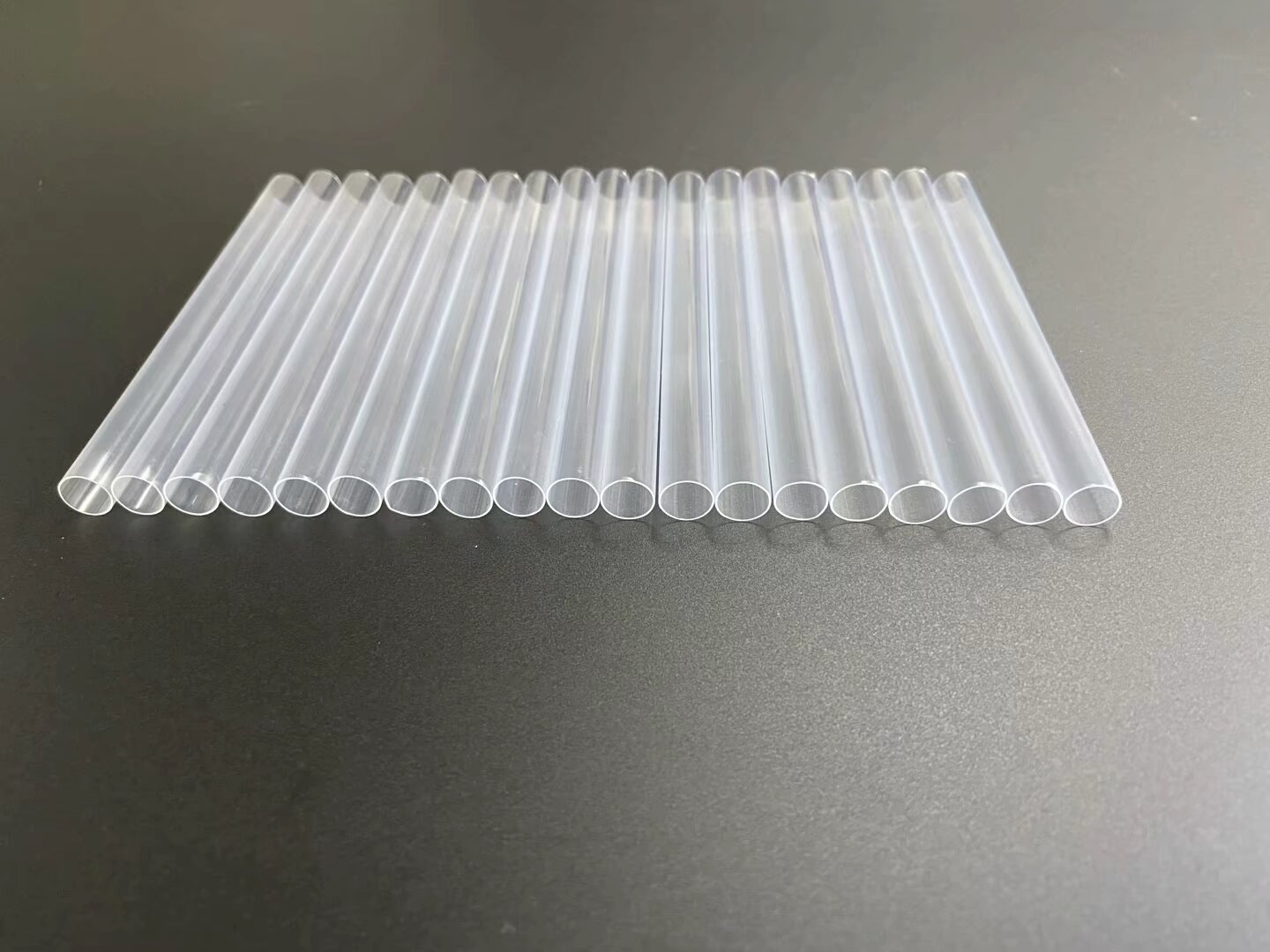
Final Technical Decision
When you specify medical grade heat shrink tubing, your decision should follow the complete device requirement. Start with the tubing’s function, then evaluate the polymer, dimensions, temperature exposure, installation method, sterilization process, cleanliness requirements, biological safety information, and documentation.
The strongest specification is one that tells your supplier exactly what you need and gives your quality team enough information to verify every production lot.
For outdoor medical equipment or equipment exposed to sunlight, you may also need to evaluate UV-resistant heat shrink tubing. For automotive medical equipment or specialized vehicle-based systems, automotive heat shrink tubing can provide a relevant comparison of environmental and harness requirements.
How You Choose Between Medical Heat Shrink Tubing Options
When you compare medical grade heat shrink tubing, you should evaluate the complete specification instead of choosing by polymer name alone. Your decision depends on where the tubing sits in the device, what it contacts, how long it remains in service, how you process the assembly, and what environmental conditions it must withstand.
Use the comparison below as a practical decision tool when you are narrowing down material options.
| Selection Factor | Standard Polyolefin | FEP or Fluoropolymer | Dual-Wall Construction | Application-Specific Medical Grade |
|---|---|---|---|---|
| Electrical insulation | Good | Excellent | Good | Depends on material |
| Chemical resistance | Moderate to good | Excellent | Depends on outer and adhesive layers | Application dependent |
| Flexibility | Good | Moderate | Moderate | Material dependent |
| Sterilization suitability | Must be verified | Must be verified | Must evaluate adhesive separately | Must be specifically verified |
| Biological evaluation | Application dependent | Application dependent | Application dependent | Documentation should match intended use |
| Environmental sealing | Limited with single wall | Usually application dependent | Better where adhesive is suitable | Depends on construction |
| Best selection basis | General protection | Chemical or thermal demands | Sealing and added protection | Regulated medical-device requirements |
You should use this table to narrow the options, not to declare one material universally suitable. The final choice still requires verification against your device, manufacturing process, sterilization method, and regulatory requirements.
Why Sterilization Can Change Polymer Performance
Sterilization can change the physical properties of polymers even when the tubing initially meets your dimensional requirements. Depending on the process, you may see changes in flexibility, colour, tensile properties, elongation, dimensional stability, or surface characteristics.
If your device uses steam sterilization, you need to pay particular attention to elevated temperature and moisture. If you use radiation, you should investigate whether the polymer can maintain its required properties after the expected radiation dose. For ethylene oxide, you should consider the interaction between the material, sterilization cycle, aeration, and residual process chemicals.
Your validation should reproduce the actual production sterilization cycle.
Chemical Exposure and Cleaning Agents
Your medical device may encounter disinfectants, detergents, solvents, oils, bodily fluids, or other chemicals during manufacturing, cleaning, sterilization, or use. A tubing material that performs well in dry electrical applications may behave differently after repeated chemical exposure.
Chemical compatibility should therefore be evaluated alongside temperature and mechanical performance. You should check whether exposure causes swelling, cracking, embrittlement, softening, discoloration, loss of adhesion, or dimensional changes.
Your cleaning process belongs in the tubing specification.
What Happens When the Tubing Is Installed Incorrectly
Installation errors can undermine an otherwise suitable material. If you apply excessive heat, you can damage the polymer or nearby components. If you use insufficient heat, the tubing may not recover fully. If you position the tubing incorrectly before recovery, the finished assembly may not provide the intended insulation, strain relief, or protection.
You should also control the heating distance, movement, equipment settings, and recovery sequence during production. For repeat manufacturing, your work instruction should define these parameters instead of leaving installation to operator judgment.
Repeatable installation is part of product quality.
Regulatory and Compliance Considerations
The phrase “medical grade” does not replace your regulatory evaluation. You need to determine what requirements apply to your finished device based on its intended purpose, body contact, duration of contact, manufacturing process, and market.
ISO 10993-1:2025 provides a framework for biological evaluation within a medical-device risk-management process. The standard does not mean that every polymer carrying an ISO 10993-related test result is automatically suitable for every medical application. You still need to assess the specific device and its intended contact conditions.
Your regulatory team should determine which evidence your device actually requires.
Chemical characterization can also become relevant when you need to identify substances that may be released from materials. ISO 10993-18 addresses chemical characterization within the biological evaluation framework, while ISO 10993-17 addresses toxicological risk assessment of constituents.
The applicable evidence depends on your device risk assessment.
Cost Versus Qualification Risk
Choosing the cheapest tubing can increase your total project cost if the material fails qualification or requires design changes later. A change in polymer, adhesive, dimensions, or sterilization compatibility can force additional testing and delay production.
You should therefore compare the purchase price with qualification effort, validation requirements, supplier consistency, and replacement risk. This becomes especially important when your device requires recurring production because the cost of an unsuitable material can multiply across every production lot.
A slightly higher component cost can be less expensive than repeating device validation.
Procurement Strategy for Medical Applications
When you request a quotation, give your supplier enough information to identify the correct product. Include the required dimensions, shrink ratio, wall thickness, operating temperature, installation temperature, material preference, sterilization method, expected chemical exposure, and documentation requirements.
You should also distinguish between prototype quantities and production volumes. Your supplier may provide samples from one production condition while your production order uses another manufacturing lot. Establishing the approved product specification before scaling helps you maintain consistency.
Your purchase order should reference the exact approved specification.
Supplier Qualification Matters
Your supplier becomes part of your quality-control strategy when the tubing forms part of a regulated medical device. You need to know whether the supplier can maintain dimensional consistency, identify the material supplied, control production changes, and provide the technical documentation required for your qualification process.
You should also establish what happens when the supplier changes raw materials, tooling, production locations, or manufacturing processes. These changes can affect your validated design even when the product name remains unchanged.
Supplier communication should be part of your procurement specification.
Technical Information You Should Keep on File
For a controlled medical-device supply chain, your technical file should contain the information needed to identify and evaluate the tubing. The exact documentation depends on your regulatory pathway and application, but your purchasing and quality teams should have access to the current product specification and relevant supporting evidence.
You should maintain the approved material description, dimensions, applicable test information, sterilization compatibility data, and supplier documentation. You should also control revisions so your production team does not accidentally install an outdated specification.
Document control protects your qualification work.

DIFVAN has more than 20 years of manufacturing experience producing cable management products, heat shrink tubing, cable glands, and electrical connection components. That experience gives you an established manufacturing base when you need repeatable dimensions and consistent product specifications across multiple purchasing cycles.
DIFVAN provides different heat shrink material options and supports OEM requirements, allowing you to define the tubing around your actual assembly rather than forcing one standard product into every application. This can help you address unusual dimensions, material requirements, packaging needs, and project-specific sourcing conditions.
DIFVAN also supports bulk supply and international export requirements. For you as a procurement buyer, this matters when your production schedule depends on consistent specifications, predictable supply, and clear communication between sample approval and repeat orders.
You can also discuss project requirements directly with the DIFVAN team when you need assistance identifying an appropriate specification. A defined product requirement gives you a stronger basis for quotation, sample evaluation, and production purchasing.
Working with a manufacturer gives you a direct route for discussing specification changes, production requirements, and recurring supply. That becomes increasingly important when you move from prototype evaluation into controlled production.


FAQs
1. What makes heat shrink tubing medical grade?
Medical grade heat shrink tubing must be evaluated according to its intended medical application rather than a generic label. You need to consider the polymer, formulation, cleanliness, biological safety, chemical exposure, sterilization, and finished-device requirements. The supporting documentation must match the application you are qualifying.
2. Is medical grade heat shrink tubing biocompatible?
Some medical tubing products have biological evaluation data, but you should not assume that every product is suitable for every type of body contact. ISO 10993-1 uses a risk-based framework that considers the finished device, contact type, and exposure duration. Your regulatory assessment determines what evidence you need.
3. Can you use medical heat shrink tubing inside a medical device?
Yes, heat shrink tubing can protect internal wiring, connections, and components in medical equipment. You still need to determine whether the material creates any biological, chemical, thermal, or contamination concerns within your device. Your final selection should follow your device qualification requirements.
4. Can you sterilize medical grade heat shrink tubing?
Some materials can tolerate specific sterilization methods, but compatibility depends on the exact product and process. You should verify performance after the complete sterilization cycle rather than relying on the polymer name alone. Repeated sterilization may also require additional evaluation.
5. What temperature should you use to install heat shrink tubing?
You should follow the supplier’s specified recovery temperature and installation procedure. Your heat source must provide enough energy for complete recovery without overheating the tubing or nearby components. You can also evaluate the difference between recovery temperature and operating temperature when specifying your product.
6. Does shrink ratio matter for medical applications?
Yes. You need enough expanded diameter to install the tube over the largest section of your assembly while achieving the required recovered fit around the smallest section. Incorrect shrink ratio can cause incomplete coverage, excessive wall thickness, or poor mechanical protection.
7. Is FEP suitable for medical heat shrink tubing?
FEP can be selected for applications where chemical resistance, thermal performance, and dimensional properties are important. However, you should evaluate the exact FEP formulation and product construction against your medical-device requirements. The material name alone does not establish suitability for every medical application.
8. What documentation should you request from a medical heat shrink supplier?
You should request the exact product datasheet, material information, dimensions, applicable biological evaluation information, sterilization compatibility data, and relevant test documentation. Your quality and regulatory teams may require additional chemical or toxicological information. The required evidence depends on your finished device.
9. Can dual-wall heat shrink tubing be used for medical devices?
You should evaluate the entire construction because dual-wall tubing includes both the outer tubing and an internal adhesive layer. The adhesive introduces additional material and therefore additional qualification considerations. You should confirm biological, chemical, cleanliness, and sterilization requirements before approving it.
10. How do you choose a supplier for medical grade heat shrink tubing?
You should evaluate the supplier’s material control, dimensional consistency, documentation, production capability, change-control process, and ability to support your required quantities. You should also confirm that the supplier can identify the exact product specification supplied to you. These factors become increasingly important when you move from prototypes to recurring production.

When you specify medical grade heat shrink tubing, define the application before choosing the product. Confirm the material, dimensions, shrink ratio, temperature range, cleanliness requirements, sterilization compatibility, biological evaluation information, and documentation needed for your finished device.
DIFVAN supplies heat shrink tubing engineered for demanding B2B environments. Whether you need bulk supply, OEM support, or help selecting the right specification for your project, contact the DIFVAN team for a quote.

