

If you work with automotive wiring, the right heat shrink tubing applications can protect your connections from heat, vibration, moisture, abrasion, and chemical exposure. You can use heat shrink tubing around wire splices, terminals, harness branches, cable repairs, and exposed electrical connections. However, automotive environments are not uniform. A tube suitable for an interior wiring harness may not provide the temperature or chemical resistance you need inside an engine bay.
Your application determines the tubing specification.
Who This Guide Is For
Electrical Contractors and Project Buyers
If you’re an electrical contractor or project buyer, you need heat shrink tubing that performs consistently across repeated wiring installations. Automotive and industrial projects can involve hundreds or thousands of connections, so inconsistent shrinkage, incorrect dimensions, or unsuitable material can create rework during assembly and inspection.
DIFVAN gives you access to different heat shrink tubing sizes, shrink ratios, and construction options for electrical protection. You can standardize your commonly used specifications and match them to the cable dimensions and operating environment required by your project.
• Consistent dimensional specifications
• Bulk supply for repeated projects
Importers and Distributors
If you’re an importer or distributor, you need a product range that covers more than one application without creating unnecessary inventory. Your customers may use the same tubing for automotive repairs, marine wiring, industrial equipment, and electrical assemblies, but their environmental requirements can differ significantly.
DIFVAN supports multiple heat shrink configurations so you can build your range around common industrial applications. You can also discuss OEM and bulk requirements when your customers need private-label packaging or repeat supply.
• Multiple sizes and configurations
• OEM and bulk purchasing support

Retailers and DIY Chains
If you’re a retailer or DIY chain, you need products that are easy to specify and suitable for common electrical repair tasks. Automotive customers may need tubing for wire repairs, terminal protection, battery cables, or harness modifications, while other customers may use it for household and workshop wiring.
DIFVAN’s heat shrink tubing range gives you options for basic insulation and applications where additional environmental protection is required. You can organize your product range around common diameters and application requirements.
• Automotive repair applications
• Standard and adhesive-lined options
Brands and OEM Manufacturers
If you’re a brand or OEM manufacturer, you need repeatable tubing performance across production batches. Your specification can include recovered diameter, supplied diameter, shrink ratio, wall thickness, material, temperature range, color, and packaging requirements. For harness identification schemes, colored heat shrink tubing is available in polyolefin and PVC with published 2:1 size charts.
DIFVAN supports OEM requirements and bulk production, allowing you to establish a consistent tubing specification for harnesses and equipment assemblies. This becomes especially important when the same harness design enters long-term production.
• OEM specification support
• Consistent production requirements

The table below gives you a starting point for matching the application with the tubing construction.
| Application Scenario | Recommended Specification |
|---|---|
| Automotive wire harness | 2:1 polyolefin heat shrink tubing |
| Engine bay wiring | Heat-resistant tubing matched to operating temperature and fluid exposure |
| Wire splice protection | 2:1 or 3:1 tubing sized over the completed splice |
| Harness branch protection | 3:1 tubing for larger or irregular transitions |
| Marine cable connections | 3:1 adhesive-lined heat shrink tubing |
| Telecom cable joints | Application-specific tubing for insulation and environmental protection |
| Aerospace wiring | Certified tubing matched to project requirements |
| Industrial machinery | Polyolefin or specialty tubing based on heat, abrasion, and chemical exposure |
Use the application as your first filter, then confirm diameter, temperature, shrink ratio, and environmental requirements before ordering. For exact sizing, check the DIFVAN heat shrink tubing size chart.
Why Automotive Heat Shrink Tubing Requires More Care
When you install wiring inside a vehicle, you are protecting more than the electrical conductor. You are also protecting the insulation, connection point, and mechanical transition between components. A harness can move repeatedly under vibration, rub against brackets, experience temperature cycling, and encounter fluids such as engine oil, fuel, coolant, and cleaning chemicals. A poorly selected tube can shrink unevenly, lose mechanical grip, or deteriorate faster than the surrounding harness.
You need to evaluate the complete environment around the connection.
A tube that works well inside the passenger compartment may not be appropriate near an engine, exhaust system, turbocharger, or other high-temperature component.
Engine Bay Heat and Chemical Exposure
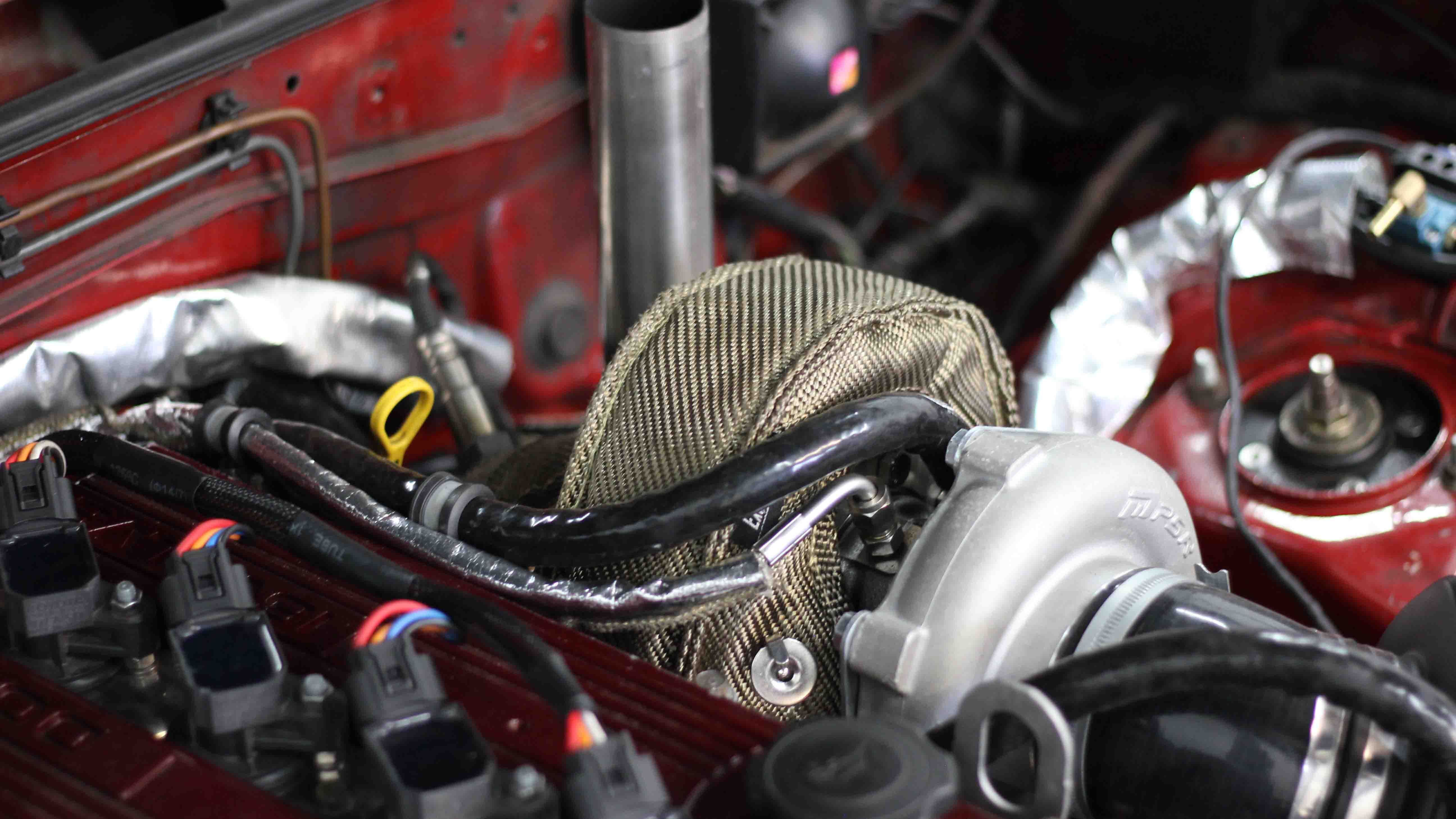
Engine-bay wiring creates one of the more demanding heat shrink tubing applications because temperature exposure can be continuous rather than occasional. You need to consider the temperature surrounding the harness, not simply the ambient temperature listed for the vehicle. Heat can increase significantly near exhaust components, turbochargers, cylinder heads, and other heat-generating systems.
Before you select tubing, compare the tubing’s operating temperature range with the actual location of the harness. If the connection sits close to a heat source, you also need to consider radiant heat and the possibility of temperature cycling. Repeated heating and cooling can place additional stress on the tubing and the underlying insulation.
Temperature selection is part of the electrical design.
Chemical exposure also matters. Engine compartments can expose tubing to oil, fuel, coolant, grease, road contaminants, and cleaning agents. If the material does not tolerate the specific chemicals present in your application, the tubing can become brittle, soften, swell, or lose its mechanical properties over time.
You should evaluate chemical resistance together with temperature resistance.
For connections exposed to moisture and fluids, adhesive-lined heat shrink can provide additional sealing around the protected area. You can review DIFVAN adhesive heat shrink tubing when your application requires environmental protection rather than electrical insulation alone.
Wire Harness Branching and Splice Protection
Wire harnesses contain numerous transition points where individual conductors split, join, or change direction. These locations can experience greater mechanical stress than a straight section of cable because the wires move relative to one another. Heat shrink tubing can reinforce these areas while providing insulation around the connection.
When you’re protecting a splice, you should measure the maximum outside diameter of the completed connection rather than the original wire alone. The tubing must slide over the connection before shrinking, then recover sufficiently to grip the assembly after heating.
Your finished splice determines the tube size.
A 2:1 shrink ratio can work well when the difference between the supplied and recovered diameters is relatively small. A 3:1 ratio gives you more recovery when the connection has a larger diameter than the cable or when you need to cover irregular transitions.
The shrink ratio becomes especially important around harness splices.
Before installation, make sure the tube can pass completely over the connection without excessive force. After positioning, apply controlled heat evenly around the circumference. You want the tubing to recover uniformly without scorching the material or damaging the cable insulation.
Proper positioning matters as much as the tubing itself.
Quick Technical Reference
Use this reference when you are narrowing down the basic specification for an automotive wiring application. The final selection should still come from the exact product datasheet because dimensions and temperature ratings vary between tubing constructions.
| Specification | What You Need to Check | Why It Matters |
|---|---|---|
| Supplied diameter | Largest diameter the tube must pass over | Ensures you can install the tube over the complete connection |
| Recovered diameter | Final diameter after shrinking | Determines whether the tubing grips the connection |
| Shrink ratio | 2:1, 3:1, or higher | Determines how much diameter variation the tubing can accommodate |
| Wall thickness | Recovered wall thickness | Affects insulation and mechanical protection |
| Material | Polyolefin or application-specific material | Determines temperature and environmental performance |
| Operating temperature | Actual service temperature | Prevents premature material degradation |
| Adhesive lining | Required or not required | Adds environmental sealing around exposed connections |
| Color | Required identification color | Helps with circuit identification and assembly control |
Do not select tubing from cable conductor size alone. Your completed connection diameter and installation environment determine the practical specification.
Marine and Moisture-Sealing Applications
Marine wiring creates a different set of heat shrink tubing applications because water exposure can become continuous. Saltwater, condensation, spray, and high humidity can reach electrical connections through small openings in the insulation. If moisture reaches a splice or terminal, corrosion can increase electrical resistance and eventually weaken the connection.
You need to treat sealing as part of the connection design.
Adhesive-lined heat shrink tubing is useful when you need the tubing to conform around the connection while the adhesive fills small gaps during recovery. Your selection still needs to account for the cable diameter, recovered diameter, operating temperature, and the actual marine environment.
A sealed connection starts with correct sizing.
For marine cable repairs and terminations, a 3:1 adhesive-lined tube can be useful when the connection has a substantially larger diameter than the cable. The greater recovery range allows you to cover irregular transitions without leaving an oversized section around the cable.
You should still verify the manufacturer’s recovered dimensions before installation.

Telecom, Aerospace, and Manufacturing Applications
Telecom installations often place cables in locations where mechanical protection, moisture resistance, identification, and flame performance can matter at the same time. You may use heat shrink tubing around cable joints, terminations, exposed conductors, or transition points. The correct specification depends on whether your installation is indoors, outdoors, underground, or exposed to mechanical stress.
Your telecom application should determine the tubing grade.
Aerospace applications require tighter control over material properties because weight, temperature, vibration, flame behavior, and reliability can all affect the specification. You should not treat general-purpose polyolefin tubing as automatically suitable for an aerospace assembly. Your project specification and applicable qualification requirements must determine the material you select.
Application-specific certification can be critical.
In manufacturing equipment, heat shrink tubing can protect wiring around motors, sensors, control panels, actuators, and moving assemblies. You can use it to reinforce connections and reduce abrasion at vulnerable points, particularly where cables repeatedly move against brackets or other components.
The installation environment determines the required protection level.

Matching Tubing to the Working Environment
The same cable diameter can require different heat shrink tubing depending on where you install it. A dry control cabinet may only require electrical insulation and basic abrasion protection, while an engine bay may require greater temperature and chemical resistance. A marine connection may require environmental sealing, while an industrial machine may need stronger mechanical protection.
Use the environment as a selection filter before you compare products.
| Application Condition | Standard Heat Shrink | Adhesive-Lined Heat Shrink | Specialty Grade |
|---|---|---|---|
| Dry automotive harness | Suitable | Usually unnecessary | Usually unnecessary |
| Engine bay wiring | Suitable when temperature rating is adequate | Suitable when sealing is also required | Use when conditions exceed standard grades |
| Wire splice | Suitable | Suitable for exposed connections | Depends on project requirements |
| Marine connection | Limited sealing capability | Preferred | Use when specified by the project |
| Outdoor telecom | Suitable for basic protection | Preferred for moisture exposure | Use when specific performance is required |
| Aerospace assembly | Not automatically suitable | Not automatically suitable | Select according to approved specification |
| Industrial machinery | Suitable for general protection | Useful for moisture and chemical exposure | Use when higher performance is required |
The table helps you narrow the construction, but you still need the product datasheet for final specification. Do not substitute a general-purpose tube simply because the dimensions appear correct.
Failure Prevention During Installation
Most heat shrink failures begin with incorrect selection or installation rather than the concept of heat shrinking itself. If you choose a tube that cannot recover sufficiently, the finished connection may remain loose. If you select a tube that is too small, you may damage the insulation while forcing it over the connection.
Sizing errors are easier to prevent before installation than after assembly.
You should also avoid concentrating heat on one location. Excessive localized heat can scorch the tubing, damage the cable insulation, or cause adhesive to flow unevenly. Move your heat source continuously around the tubing and along its length until recovery is uniform.
Controlled heating gives you a more consistent finished connection.
Another common problem occurs when you position the tubing too close to a connector, sharp edge, or heat source. Before heating, confirm that the tube fully covers the intended protection area and will not interfere with adjacent components after recovery.
Position the tubing before you apply heat.
Comparing Tubing by Application
When you are choosing between standard and adhesive-lined tubing, the key question is what protection your connection actually needs. Standard tubing can provide electrical insulation and mechanical protection, while adhesive-lined tubing adds a sealing function when properly installed.
Your environment should determine the choice.
| Tubing Type | Best Fit | Key Decision |
|---|---|---|
| Standard 2:1 | Uniform wire and cable connections | Provides basic electrical insulation and mechanical protection |
| Standard 3:1 | Irregular cable transitions | Provides greater recovery range for changes in diameter |
| Adhesive-lined 3:1 | Marine, outdoor, and exposed connections | Adds environmental sealing against moisture and contaminants |
| Specialty grade | High-performance or regulated applications | Selected for specific temperature, flame, chemical, or qualification requirements |
Choose standard tubing when sealing is unnecessary. Choose adhesive-lined tubing when moisture ingress or environmental exposure creates a specific risk.
Failure Analysis: What You Should Look For
If the recovered tube remains loose, check whether the supplied and recovered diameters were correctly matched to the connection. A tube that does not contract sufficiently may provide limited mechanical support and can allow moisture or contaminants to enter around the connection.
The finished tube should grip the protected assembly securely.
If you see discoloration, scorching, cracking, or damaged cable insulation, inspect the heating process. Excessive heat or prolonged heating in one location can damage both the tubing and the underlying cable. You should also verify the tubing’s temperature rating if the failure occurs during service rather than installation.
Installation temperature and operating temperature are separate considerations.
If adhesive-lined tubing does not seal evenly, inspect the surface condition and tubing position. Contamination, incorrect sizing, insufficient recovery, or uneven heating can prevent the adhesive from forming a continuous seal.
A sealed connection requires correct preparation, sizing, positioning, and heating.
Standards and Validation
Your required standards depend on the industry and application. Heat shrink tubing specifications can address properties such as flame behavior, temperature performance, electrical insulation, dimensional recovery, and environmental resistance. You should therefore identify the required standard from your equipment, vehicle, customer, or project specification before purchasing.
Do not select a standard based only on the product description.
For automotive, marine, telecom, aerospace, or industrial applications with formal compliance requirements, you should request the manufacturer’s applicable technical documentation and qualification information. This is especially important when the tubing forms part of a safety-critical electrical assembly.
Your purchasing specification should identify the required compliance level before production begins.
Procurement and Standardization
When you purchase heat shrink tubing for repeated production, you should specify more than the nominal diameter. Your purchase specification should identify the material, supplied diameter, recovered diameter, shrink ratio, wall thickness, color, operating temperature, adhesive requirement, and any required industry qualification.
This prevents substitutions that appear dimensionally similar but perform differently.
You should also standardize tubing sizes around the actual connection dimensions used in your assemblies. Keeping too many overlapping sizes increases inventory complexity, while carrying too few sizes can force installers to use unsuitable tubing.
A controlled size range gives you better purchasing and installation consistency.

DIFVAN has more than 20 years of manufacturing experience producing cable management products and electrical protection components. That experience supports consistent production across repeat orders, which matters when you need the same tubing specification throughout a long manufacturing or construction program.
DIFVAN provides different heat shrink tubing configurations for electrical insulation, mechanical protection, and environmental sealing. This gives you options when your application involves different cable diameters, connection geometries, operating environments, or OEM requirements.
DIFVAN also supports bulk supply and international export requirements. For procurement teams, this helps you plan repeat orders around defined specifications and delivery requirements instead of changing products between project phases.
You can also contact the DIFVAN technical and commercial team for project-specific requirements and quotation support. When you are finalizing a bill of materials, direct supplier communication helps you confirm the correct specification before placing a larger order.
Working directly with the manufacturer gives you better control over product specifications and repeat purchasing. You can establish a defined tubing specification and maintain it across future orders.
These answers address common questions about heat shrink tubing applications and are structured for search visibility.

FAQs
1. What are the most common heat shrink tubing applications?
You can use heat shrink tubing for wire splices, terminals, cable repairs, harness branches, electrical insulation, and mechanical protection. Automotive, marine, telecom, aerospace, and manufacturing systems all use heat shrink products for different protection requirements. Your environment determines the material, shrink ratio, and construction you need.
2. Is heat shrink tubing suitable for engine bay wiring?
You can use heat shrink tubing in an engine bay when its temperature and chemical resistance match the installation. You should consider continuous temperature, temperature cycling, oil, fuel, coolant, vibration, and nearby heat sources. Always confirm the product’s operating temperature and chemical resistance before installation.
3. When should you use adhesive-lined heat shrink tubing?
You should consider adhesive-lined tubing when your connection requires additional environmental sealing. It is particularly useful around exposed automotive, marine, and outdoor electrical connections. The tubing still needs correct sizing and controlled heating to produce a reliable seal.
4. What shrink ratio should you use for wire harnesses?
You should choose the shrink ratio based on the difference between the largest installation diameter and the final recovered diameter. A 2:1 ratio suits relatively uniform connections, while 3:1 provides greater recovery for irregular shapes. Your actual connector or splice dimensions should determine the final choice.
5. Can you use heat shrink tubing on marine cables?
Yes, you can use suitable adhesive-lined tubing on marine electrical connections where moisture protection is required. You should select a product designed for the environmental exposure and verify its temperature and sealing characteristics. Correct preparation and heating remain essential for a reliable connection.
6. Can heat shrink tubing protect telecom cables?
You can use suitable tubing for cable insulation, joint protection, mechanical reinforcement, and selected environmental protection applications. Your telecom project may also require specific flame or material performance. Confirm the required specification before using general-purpose tubing.
7. Is standard heat shrink tubing suitable for aerospace wiring?
You should not assume that general-purpose tubing meets aerospace requirements. Aerospace assemblies can require specific material qualification, flame performance, temperature resistance, weight characteristics, and traceability. Your aerospace specification should determine the approved tubing grade.
8. Why does heat shrink tubing remain loose after heating?
A loose result can occur when the recovered diameter is too large for the protected connection. It can also indicate insufficient heating or an incorrect product selection. Check the supplied and recovered dimensions against the actual connection diameter before installation.
9. Why does heat shrink tubing crack after installation?
Cracking can result from excessive heating, unsuitable operating temperature, chemical exposure, or incorrect material selection. You should inspect both the installation process and the service environment. If cracking occurs after extended operation, compare the actual exposure with the tubing’s rated conditions.
10. How do you select heat shrink tubing for industrial applications?
Start by identifying the cable or connection diameter, operating temperature, mechanical exposure, chemical exposure, moisture level, and required sealing. Then select the material, shrink ratio, wall thickness, and construction that match those conditions. For regulated applications, you should also verify the required standards and documentation before purchasing.

When you select heat shrink tubing applications for automotive, marine, telecom, aerospace, or manufacturing systems, start with the environment rather than the tube diameter alone. You need to match the tubing to temperature, moisture, chemicals, vibration, abrasion, connection geometry, and any required compliance specification.
DIFVAN supplies heat shrink tubing engineered for demanding B2B environments. Whether you need bulk supply, OEM support, or help selecting the right specification for your project, contact the DIFVAN team for a quote.

